Strength Training for Pickleball Players Over 50: The Off-Court Plan That Helps You Move Better and Play Longer
A practical, science-backed guide to the off-court strength and mobility habits that help pickleball players over 50 move better, stay steadier, and keep playing longer.
If you are looking for strength training for pickleball players over 50, you are asking the right question. Most players focus on paddles, strategy, or court time first. But if your real goal is to move well, recover better, and stay on the court for years, the biggest gains often happen away from the baseline. A simple off-court plan can help you keep your legs under you, protect your balance, and make the game feel less punishing the day after you play.
That matters because aging affects more than just raw power. The National Institute on Aging notes that strength training helps older adults maintain muscle mass, improve mobility, and increase healthy years of life.1 The Centers for Disease Control and Prevention also highlights that regular physical activity helps older adults live independently longer, improve bone health, and reduce fall risk through better balance and coordination.2 For pickleball players, those are not abstract health benefits. They directly affect how well you decelerate, how confidently you change direction, and how long you can keep enjoying the sport.
| Common pickleball problem | What is often missing off court | Why strength training helps |
|---|---|---|
| Feeling slow getting to wide balls | Lower-body strength and lateral control | Stronger legs improve push-off, braking, and court coverage |
| Losing balance on awkward reaches | Core stability and single-leg control | Better balance reduces sloppy recovery steps and fall risk |
| Soreness after routine play | Tissue capacity and load tolerance | Gradual strength work makes normal play feel less expensive |
| Fear of getting hurt while aging | Confidence in movement | Training improves stability, resilience, and trust in your body |
Why pickleball players over 50 need more than just more pickleball
Pickleball is fun enough that many players assume the best way to improve is simply to play more. There is truth in that, but it is incomplete. The sport demands repeated starts and stops, low ready positions, trunk rotation, quick reactions, and balance under pressure. If you only pile on games without building the physical qualities underneath them, you may improve your shot selection while your body quietly falls behind your ambitions.
That is one reason strength training is so valuable. The PPA Tour recently emphasized that strong legs and a stable core help players move faster, pivot more easily, and maintain balance during long rallies, recommending strength work two to three times per week alongside sport-specific play.3 In other words, off-court training is not a separate hobby. It is the support system that makes your on-court hours more productive.
There is also a longevity issue here. The National Institute on Aging points out that age-related mobility limitations are associated with falls, chronic disease, nursing home admission, and mortality, and that maintaining an active lifestyle can substantially slow typical declines in strength and power.1 If you want pickleball to remain part of your long-term identity, you need to train for the version of yourself you want to be five or ten years from now, not just for this weekend's open play.
The best strength and mobility priorities for pickleball longevity
You do not need a complicated bodybuilding split to become a better pickleball athlete. You need a few movement patterns that transfer to the court. The most useful areas to train are lower-body strength, core stability, rotational control, upper-back support, and ankle-hip mobility.
Lower-body strength comes first because your legs are your brakes and your engine. Squats, split squats, step-ups, deadlift variations, and glute bridges all teach you to absorb force and reapply it. That matters every time you push wide for a dink, recover to center, or lower into an athletic stance.
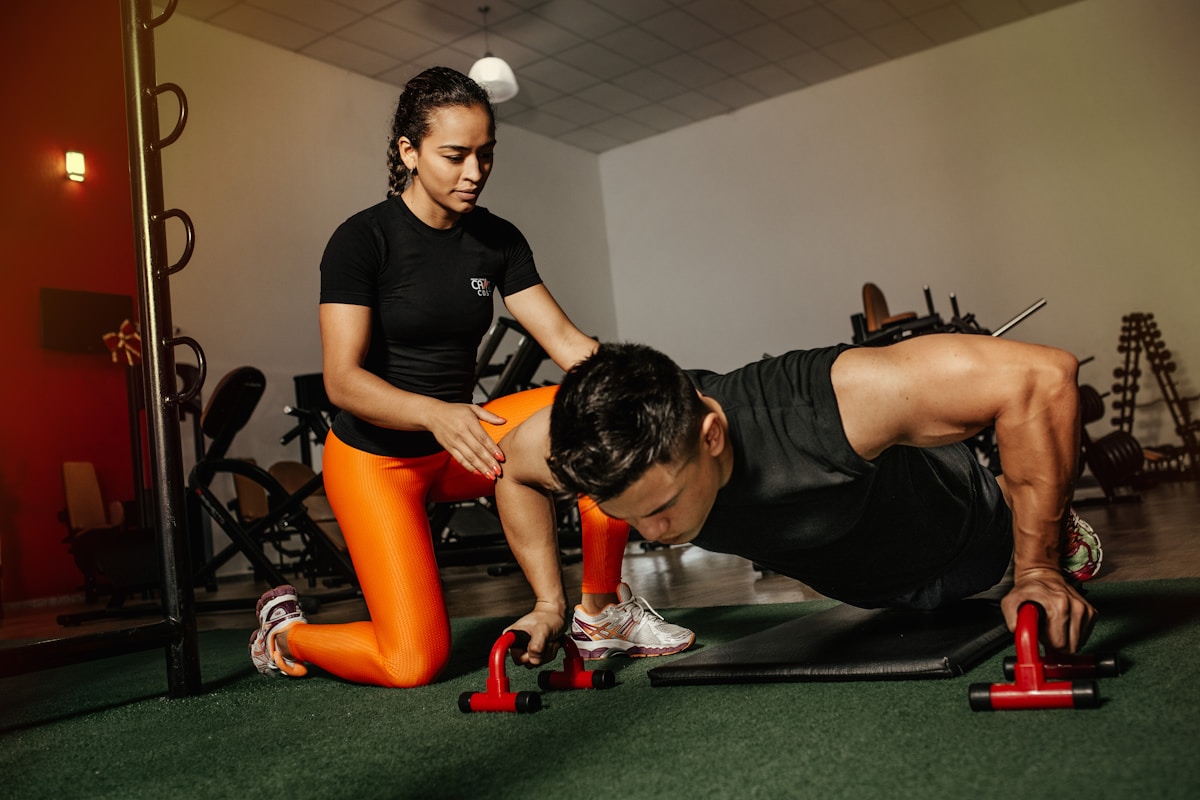
Core training matters too, but not in the old "ab workout" sense. Pickleball players need a trunk that can stay organized while the arms and legs move fast. Planks, side planks, farmer carries, and anti-rotation drills can help you stay more stable through quick exchanges and awkward reaches.
Mobility should support positions you actually use. Most players over 50 benefit from improving ankle flexibility, hip rotation, and thoracic spine mobility rather than chasing extreme stretching. Better mobility helps you get lower without collapsing, rotate more cleanly on overheads, and move laterally with less strain.
| Training priority | Practical exercise options | Pickleball payoff |
|---|---|---|
| Lower-body strength | Goblet squats, split squats, step-ups, Romanian deadlifts | Better push-off, deceleration, and court coverage |
| Core stability | Front plank, side plank, farmer carry, dead bug | More control on reaches, volleys, and recovery steps |
| Upper-body support | Rows, push-ups, dumbbell presses | Better posture and shoulder support during repeated play |
| Mobility | Ankle rocks, hip openers, thoracic rotation drills | Easier low positions and cleaner rotation |
| Balance | Single-leg stands, supported reaches, step-and-hold drills | Improved steadiness and reduced fall risk |
A realistic weekly plan that actually works
The biggest mistake older athletes make is assuming they need an aggressive training schedule to get results. In reality, consistency beats heroics. Two focused strength sessions per week is enough for many pickleball players to notice meaningful benefits in movement quality, confidence, and fatigue resistance.3
A simple weekly rhythm might include two strength sessions on non-consecutive days, one or two short mobility sessions, and your regular pickleball play. On strength days, choose four to six movements and perform them with good form, controlled tempo, and enough effort to feel challenged without feeling wrecked. Start with body weight, light dumbbells, or resistance bands if needed.
Here is what that can look like. Session one might include goblet squats, split squats, rows, side planks, and ankle mobility. Session two might include Romanian deadlifts, step-ups, a dumbbell press, farmer carries, and thoracic rotation work. If you are new to lifting, one or two sets may be enough at first. The goal is to build the habit, not to prove toughness.
The PPA Tour guidance also emphasizes progressive overload, which simply means increasing the challenge gradually over time rather than randomly doing more.3 That can mean slightly more weight, an extra repetition, or cleaner control through the same movement. Small progressions are exactly what help older players build capacity without turning training into a setback.
How strength training helps prevent the "I'm getting old" spiral
Many players interpret stiffness, slower recovery, or reduced confidence as proof that decline is inevitable. Sometimes it is not age itself that is winning. Sometimes it is undertraining. When strength, balance, and mobility are neglected, ordinary court demands can start to feel excessive.
This is where a good off-court plan changes the story. The CDC notes that physical activity in older adults improves sleep quality, lowers anxiety, and reduces depression risk in addition to helping preserve function and independence.2 That broader effect matters because confidence on court is not just muscular. It is psychological. When you feel steadier in your legs and more capable during movement, you are more likely to play assertively, recover well, and keep showing up.
The National Institute on Aging also describes evidence that even lower-intensity walking and strength programs can have substantial benefits for physical function.1 That is encouraging news for players who feel intimidated by gym culture. You do not need a complicated training identity. You need a sustainable routine that respects your body and gives it a reason to adapt.
How to start safely without overdoing it
The smartest first step is to train below your ego. Use an effort level that leaves one or two good repetitions "in the tank." Focus on exercise quality, stable positions, and control during lowering phases. If you are sore for four days after every session, you are not building momentum. You are creating friction.
It also helps to match your training to your court calendar. Do not schedule a hard leg day right before your most competitive play session. Leave enough recovery room so your training supports pickleball instead of sabotaging it. If you have significant pain, recent injury, balance problems, or medical concerns, it is wise to work with your physician or a qualified physical therapist or coach before progressing.
Above all, remember the purpose of this work. The goal is not to become a powerlifter who occasionally plays pickleball. The goal is to become a pickleball player with enough strength, balance, and mobility to keep enjoying the game for a long time.
Strength training for pickleball players over 50 is really about freedom. It gives you a better chance to move with confidence, absorb the demands of the game, and keep playing the sport you love without feeling like every season is a race against decline.
If you want more practical, science-backed strategies to play better, play longer, and play for life, subscribe to the Pulse of Pickleball newsletter and get each new Health & Longevity article delivered straight to your inbox.